


Before You Hire Your Next Employee, Ask Your Accountant These Questions
One of the biggest milestones for a UK business will be making the decision to hire a member of staff (or another person to a team).
It can mean increased capacity, improved customer service, new skills and being able to accept projects that you can’t refuse.
However, hiring is also a cost of decision.
The salary you post is just a small portion of the price. Before you make the offer you will have to take into account Employer National Insurance, workplace pension contributions, holiday entitlement, payroll administration, employment documentation and other employment costs.
And there’s another question which is often forgotten:
Is there any room for the employee in your business after the initial hiring thrill has worn off?
That’s where an accountant can serve you much more than just for payroll.
Here are a few questions to consider with your accountant before hiring your next employee.
Can My Business Actually Afford This Hire?
This may sound like a no-brainer, but it’s a top priority question to ask.
When a business owner considers an offered salary, he or she might think:
“That’s okay, we can afford that.”
However, the true cost of the employer may be greater.
The standard rate of Class 1 National Insurance paid by employers for the 2026/27 tax year is 15%, and the secondary limit of NI income for most employees is £5,000 an annum. The Employment Allowance is available for eligible employers to minimise their employer NIC liability and will amount to a maximum of £10,500 for 2026/27.
There can also be:
- Employer pension contributions
- Paid holiday
- Statutory payments (if applicable).
- Recruitment costs
- Training and onboarding
- Equipment and software
- The expense of the workplace or office.
- Payroll administration
- Employer’s liability insurance
- Other costs associated with employees
So the question isn’t really:
“Do I have the funds to pay their salary?
It’s:
“Would the whole expense of hiring them represent value for my business?”
An experienced accountant will be able to provide you with an estimate of the potential expense without you making the leap.
What Will This Employee Need to Generate for the Business?
This is where hiring becomes a business decision, rather than simply an HR decision.
Your accountant will help you to consider:
- What extra income will this person be able to contribute?
- Will they help bring in revenue?
- Will they save you time and money by generating more income?
- Will they enhance their operating capabilities?
- Will they lower the cost of outsourcing?
- How long will it take before they start to produce?
- What do you do if revenues slow in the short-term?
Not all staff members have to be involved in direct sales.
By allowing the business owner to work on more significant tasks, a finance manager, administrator or operations employee can add value to the business.
It is important to know what return you are looking for from the job.
Should I Hire an Employee or Use a Contractor?
It’s important to ask this question before agreeing to the working arrangement.
Just because an employee looks cheaper than a real self-employed contractor doesn’t mean he or she is.
Tax, National Insurance, employment rights and responsibilities are different for people who are employed in a business compared to those who are not.
There is specific guidance in HMRC and GOV.UK on determining employment status and the working relationship is what matters and not just what the contract term the person is called.

Ask your accountant:
- Does this appear to be a job?
- Was this actually about self-employment?
- What do the PAYE issues look like?
- Which employment rights might be relevant?
- What records are necessary to keep?
A misclassification can cause issues in the future.
What Will My Real Payroll Cost Look Like?
After hiring a person, the task of payroll continues as a responsibility of your business.
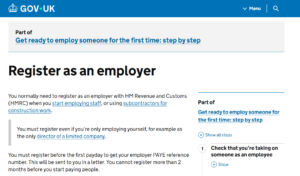
When you are using staff, you usually have to register as an employer with HMRC before you pay the first payday and have PAYE established. Employers are also obliged to report pay and deductions on or by the date pay day is paid to HMRC.
Your tax advisor should explain to you:
- Gross salary
- Employee deductions
- Employer National Insurance
- Pension contributions
- Actual employer cost
That is important, as the payout amount for the employee is different from what the business actually spends.
What About Workplace Pension Costs?
This is another expense which may be overlooked if the business owner only considers salary.
The automatic enrolment requirements start when the first employee begins work for you. Generally, staff under State Pension age who earn over £10,000 a year are eligible to be enrolled, subject to the rules that apply.
In a qualifying defined-contribution plan, the minimum contribution by the employer is 3% (and 8% if the plan is a defined-contribution plan) of the amount earned by the employee.
And your responsibilities don’t end after enrolment.
Employers continue to have a responsibility to track staff eligibility, ensure that contributions are up to date and record the eligibility.
Your accountant or payroll professional can assist you to ensure that this is considered as part of your employment budget.
What Is the Current National Minimum Wage?
The amount you must budget will vary according to the employee’s age and his/her situation.
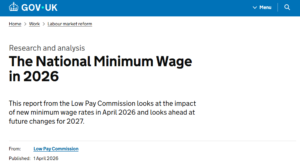
The National Living Wage for employees aged over 21 from 1st April 2026 will be £12.71 an hour. The rates for younger workers also rose; the £10.85 rate for 18- to 20-year-olds, and £8.00 for 16- to 17-year-olds.
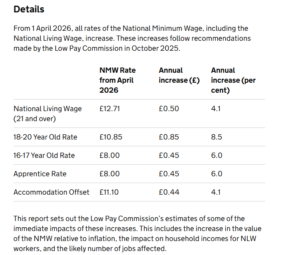
This is why it’s important to involve your accountant at the time you’re creating a hiring budget, rather than just at the salary agreement.
Where your business employs apprentices, part-time employees, works irregular hours or has different working arrangements, the relevant rules should be carefully checked.
Have I Budgeted for Holiday Pay?
Holiday is not something that is available as an optional add-on.
The majority of employees have a right to 5.6 weeks of paid holiday a year. This is typically 28 days per year, but may include bank holiday(s) provided by the employer, for individuals working 5 days per week for the entire leave year.
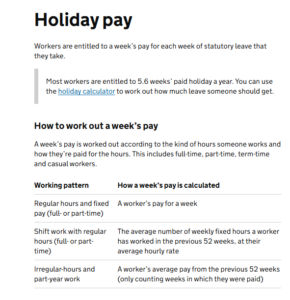
The rules for calculating holiday pay may be slightly more complex for employees who work irregular hours, variable pay, or have certain working patterns.
If you’re determining how much a new hire will cost you, don’t just multiply by twelve, but keep going.
Do I Need to Register for PAYE?
When your company is expanding to becoming an employer, it needs to be done properly.
Generally, employers should register before their first payday to receive an employer PAYE reference from HMRC.
You’ll also need an appropriate payroll software or payroll provider to:
Record employee details
Calculate pay
Calculate deductions
Report payroll information to HMRC
Maintain records
Make payments to HMRC
These are steps that are explicitly mentioned in HMRC’s employer guidance when setting up payroll.
In this instance, it can make sense for a growing business to outsource payroll.
Have I Done the Right-to-Work Checks?
This is not an accounting process, but it’s an essential part of the hiring process.
Right to work checks: Employers will need to carry out a right to work check before employing a person to check that they are legally able to work in the UK. This can be a manual check, an approved digital verification process or an online Home Office check, depending on the circumstances.
For limited use permissions, further checks may be necessary.
Do not wait until the employee has begun until they have done this.
Does the Employee Have the Right Employment Documentation?
If someone is going to begin, have the employment agreement properly documented.
Employers in the UK are required to give written statements of particulars to their employees and workers. A summary of the principal statement needs to be offered on the initial day of work and more extensive written information within two months.
The information can include details on:
- Job Title or Job Description
- Start date
- Pay
- Working hours
- Holiday entitlement
- Notice periods
- Sick pay
- Other paid leave
- Pension arrangements
- Training
- Disciplinary and grievance procedures
One place where your accountant may assist your HR or employment-law team is in this context.
Should I Change My Pricing Before I Hire?
This is one of the most beneficial questions that a business owner can ask.
Assume that you have to hire because you are overworked.
If you are already operating with a slim profit margin, hiring another employee may not be the solution as it could just be a more expensive way to lose profitability.
Before hiring, consider:
- Current pricing
- Current workload
- Additional capacity
- Employee cost
- Expected revenue/margin
- Cash-flow impact
This may expose that the true issue is that you actually need a new employee.
Perhaps you need to adjust your prices, increase your efficiency or re-align the workload.
That’s where it gets into the realm of business advice.
How Will the Hire Affect My Cash Flow?
Profits and cash are not synonymous.
You could be making a good profit, but find you’re short of cash to pay salaries and employment costs.
If you’re unsure, consult your accountant regarding:
- Monthly payroll commitments
- Employer NIC
- Pension costs
- Holiday periods
- Recruitment costs
- Equipment purchases
- Training costs
- Expected revenue timing
- Existing cash commitments
- A less than usual sales cycle
It is useful to create a cash-flow forecast to determine if the business will be able to support the extra commitment.
Could the Hire Affect My Tax Position?
When you hire a new employee, it can impact a number of aspects of your business finances.
Your accountant will be able to see:
- Employer National Insurance
- Employment Allowance eligibility
- Compensation and payroll expenses
- Pension contributions
- Employee benefits
- Business expenses
- Corporation Tax implications
- Cash-flow planning
The important fact to remember is that tax should be a factor in making the hiring decision, not once payroll begins.
Is Now Actually the Right Time to Hire?
It could be the most crucial question.
In some cases, the answer is “Yes.In some situations, the answer is “Yes.
Sometimes it’s:
“Not yet.”
And sometimes the answer is:
“Yes, but, change the role, salary structure or timing first.”
When making a hiring decision, it is important to look at more than what needs to be done today.
Look at:
Demand
Does the extra work require sustained effort or is it one-off?
Capacity
Is there an actual need for you to be unable to take on demand?
Cash flow
Are you able to afford the expense when times are quiet?
Profitability
Will hiring have a positive effect on the overall economics of the business?
Strategy
Do you feel that this position will help to take your business in the direction you want?
Owner dependency
Will hiring free up the owner to focus on growth, away from low value tasks?
The last question is one that is frequently forgotten.
The most successful hire isn’t necessarily the one who does the most work.
It might be the one who is bringing the business owner his/her time.
A Simple Pre-Hiring Financial Checklist
Before you make an offer, have a meeting with your accountant and check through:
- Role: What is the problem that this hire will solve?
- The total cost: What will the employee cost the business?
- Payroll: Do PAYE and payroll processes/flows exist?
- Which employers NIC will apply:
- Businesses may be eligible for Employment Allowance.
- Pension: What will be the automatic-enrolment responsibilities?
- Holiday: Have holiday costs and entitlement been taken into account?
- Commitment: Is the business able to sustain the commitment?
- Tax: Which tax aspects should be taken into account?
- Pricing: Do you have the pricing structure to cover the extra cost?
- Revenue: What extra capacity/revenue does the hire need to generate?
- When is the best time to invest?